

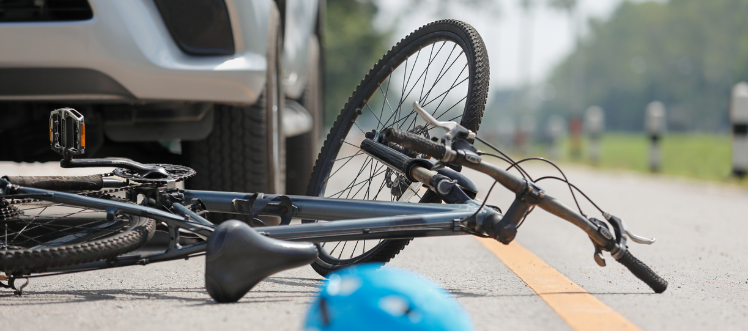
Bicycle fatalities on South Carolina roads climbed by nearly 50% last year, even as overall highway deaths fell to their lowest level in four years, according to newly released figures. Preliminary reports from the S.C. Department of Public Safety (SCDPS) show 985 people died on the state’s roadways in 2024, down 6% from 1,045 deaths in 2023. Although that drop continues a welcome downward trend from 1,048 deaths in 2022 and 1,193 in 2021, the number of bicyclists killed rose from 23 in 2023 to 34 in 2024 an alarming increase.
These figures come in the context of a 2024 WalletHub report, which found South Carolina had the highest rate of fatalities per 100 million miles driven. More broadly, the Palmetto State has consistently grappled with traffic safety issues. Older SCDPS data highlight that while some years saw slightly lower cyclist fatalities (16 in 2020), the general trend has remained stubbornly high.
Following National Trends
Katie Zimmerman, executive director of Charleston Moves, says South Carolina’s data follows national trends. Traffic deaths among vulnerable road users continue to stay high or increase. These groups include bicyclists, pedestrians, and motorcyclists.
She believes the core issue lies in infrastructure. According to her, the state does not invest enough time or money in safe road design. As a result, vulnerable travelers face higher risks.
Zimmerman also explained that safety discussions often focus on education and enforcement. However, road design plays a bigger role than most people realize. If streets encourage speeding or distraction, accidents become more likely.
The Role of Road Design
Zimmerman stressed a simple point. People need safe spaces to travel. When roads lack proper design, danger increases for everyone.
South Carolina has a three-foot passing law meant to protect cyclists. However, many advocates say enforcement remains weak. Poor road design often cancels out the benefits of such laws.
Safety researchers support “complete streets” policies as a better solution. These policies ensure roads work for everyone. This includes pedestrians, cyclists, transit users, and drivers.
Big Projects for Safer Access
Charleston has started a major project to improve safety. The West Ashley Crossing will provide a bike and pedestrian bridge over the Ashley River. The project costs over $90 million and will connect West Ashley to downtown Charleston.
Right now, cyclists and pedestrians must use narrow and unsafe paths on older bridges. This project aims to solve that problem and improve access.
Local advocates see this as a strong step forward. They hope it inspires similar improvements across the state.
State comparisons and rankings
Despite some signs of progress, the 2024 WalletHub report ranked South Carolina as the nation’s 18th best state for driving overall, but the ninth worst for safety. These seemingly contradictory findings mirror the state’s challenges: while certain roadway improvements and interstate projects have made driving more convenient, roads remain perilous for vulnerable users.
A separate analysis by the League of American Bicyclists has often placed South Carolina among the more dangerous states for cyclists due to a combination of infrastructure deficiencies, driver behavior, and limited funding.
Other annual traffic numbers (SCDPS data)
- Pedestrian deaths: 154 in 2024; 159 in 2023; 163 in 2022; 194 in 2021
- Motorcycle deaths: 129 in 2024; 140 in 2023; 137 in 2022; 160 in 2021
- Total deaths: 998 in 2024; 1,045 in 2023; 1,088 in 2022; 1,193 in 2021
While overall totals have improved from their peak in 2021, the consistent toll on bicyclists, pedestrians, and motorcyclists remains a major point of concern among safety researchers.
South Carolina’s roads need work
A 2021 report by the S.C. Section of the American Society of Civil Engineers noted that while the state increased its gas tax in 2017 to address road maintenance—neglected for three decades—billions of dollars in roadwork remain necessary through 2040.
“Based on data from 2018, 74% of the interstate pavements are in good condition, 14% are fair and 12% are in poor condition,” the report stated.
“Unfortunately, the same does not appear to be true for the primary and secondary roads, where the good condition pavements are less than 30%; the fair-condition pavements are about 20%; and poor condition pavements are approximately 50%.”
The state has completed or is nearing completion on several large-scale interstate projects such as expansions on I-85 and reconfigurations of I-26 but many of the roads used heavily by cyclists are secondary or rural routes, which often lag in upgrades.
Looking ahead
In recent years, SCDOT has initiated a few “road diet” pilots in selected counties. These involve reducing lanes, widening shoulders, and adding sidewalks and bike lanes to calm traffic. Early data suggests these steps help reduce crashes for all users, but implementation remains patchy and depends heavily on local support.
Some cities, including Columbia and Greenville, are exploring Vision Zero strategies aimed at eliminating all traffic deaths through measures like enhanced crosswalks, protected bike lanes, and reduced speed limits in high-risk corridors.
Moreover, organizations like Charleston Moves and the Palmetto Cycling Coalition continue to push for stronger safety laws, better enforcement, and, critically, more investment in bike-and-pedestrian-friendly infrastructure. Despite the grim rise in bicycle fatalities for 2024, these groups remain optimistic that sustained advocacy and better design can reverse the trend.
Though overall traffic deaths have declined in South Carolina, the sharp increase in bicyclist fatalities underscores a serious gap in roadway safety especially for those on two wheels. Statewide upgrades, consistent application of Complete Streets policies, and local initiatives like Charleston’s West Ashley Crossing project could help address these gaps. However, until design standards, enforcement and funding priorities shift to protect cyclists and pedestrians, South Carolina will remain a challenging and sometimes dangerous place for those who share the road.
